

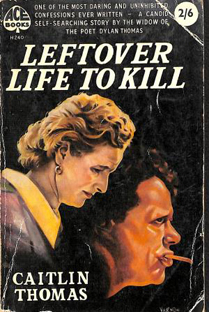
Caitlin Thomas
Leftover life to kill
En anglais – One of the most daring and uninhibited confessions ever written – a candid self-searching story by the widow of the poet Dylan Thomas
Vous aimerez aussi

Scarlet Feather
En Anglais – Set in contemporary Ireland, filled with warmth, wit, and drama, Scarlet Feather is the story of Cathy Scarlet and Tom Feather, their spouses, families, and friends, and the struggling new catering business that transforms their lives in ways big and small.
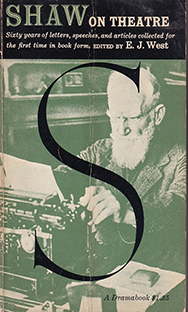
Shaw on Theatre
60 years of collected letters, speeches, and articles. Contains:Appendix to The Quintessence of Ibsenism, A Dramatic Realist to his Critics, Preface to The Theatrical « World » of 1894, How to Lecture on Ibsen, The Problem Play-A Symposium, The Censorship of the Stage in England, On Being a Lady in High Comedy, Why Cyril Maude Did Not Produce You Never Can Tell, How to Make Plays Readable, The Dying Tongue of Great Elizabeth, Letters to Louis Calvert on Playing Undershaft, What Is the Finest Dramatic Situation?, Mr. Trench’s Dramatic Values, On the Principles that Govern the Dramatist, To Audiences at Major Barbara, On Cutting Shakespear, Lord Grey, Shakespear, Mr Archer, and Others, I Am a Classic But Am I a Shakespear Thief?, Letter to J.T. Grein, Shakespear: A Standard Text, On Clive Bell’s Article, The Art of Rehearsal, Shakespear and the Stratford-upon-Avon Theatre: A Plea for Reconstruction, On Printed Plays, John Barrymore’s Hamlet, Theatres and Reviews Then and Now, The Colossus Speaks, Playhouses and Plays, Mr. Shaw on Mr. Shaw, Bernard Shaw Talks about Actors and Acting, Speech as Guest of Honor at London Critics Circle Annual Luncheon, On Gordon Craig’s Henry Irving, My First Talkie, Gordon Craig and the Shaw-Terr Letters, Arms and the Man on the Screen, Too True to be Good, An Aside, Dramatic Antiquities at Malvern, Playwrights and Amateurs, The Simple Truth of the Matter, This Year’s Program, Saint Joan Banned.

The black country
En Anglais – When members of a prominent family disappear from a coal-mining village—and a human eyeball is discovered in a bird’s nest—the local constable sends for help from Scotland Yard’s new Murder Squad. Fresh off the grisly 1889 murders of The Yard, Inspector Walter Day and Sergeant Nevil Hammersmith respond, but they have no idea what they’re about to get into. The villagers have intense, intertwined histories. Everybody bears a secret. Superstitions abound. And the village itself is slowly sinking into the mines beneath it. Not even the arrival of forensics pioneer Dr. Bernard Kingsley seems to help. In fact, the more the three of them investigate, the more they realize they may never be allowed to leave . . . .
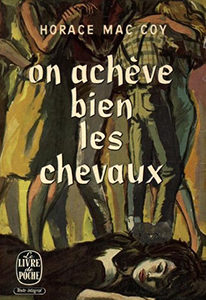
On achève bien les chevaux
Hollywood avant la Seconde Guerre mondiale. Robert Syberten rencontre Gloria Bettie. Comme elle, il est figurant au cinéma. Mais loin d’avoir réalisé leurs rêves, ils n’ont eu qu’un long parcours chaotique semé d’échecs. Désœuvrés et sans argent, ils décident de s’inscrire à un marathon de danse dans l’espoir de décrocher les 1 000 dollars de récompense et de se faire remarquer par un des producteurs formant le public quotidien de ces soirées. Il ne leur reste plus qu’à tournoyer des semaines entières au rythme de l’orchestre. Écrit à la suite de la grande dépression de 1929, « On achève bien les chevaux » est le premier roman noir d’Horace McCoy. Ce texte intemporel, qui n’a rien perdu de sa force évocatrice, est une violente dénonciation du rêve américain. Particulièrement noir et désespéré, il s’attache à explorer l’envers du décor en décrivant la misère de ceux prêts à toutes les humiliations pour pouvoir gagner simplement de quoi survivre. Sidney Pollack en a tiré un très beau film avec notamment Jane Fonda dans le rôle principal. Christophe Dupui